
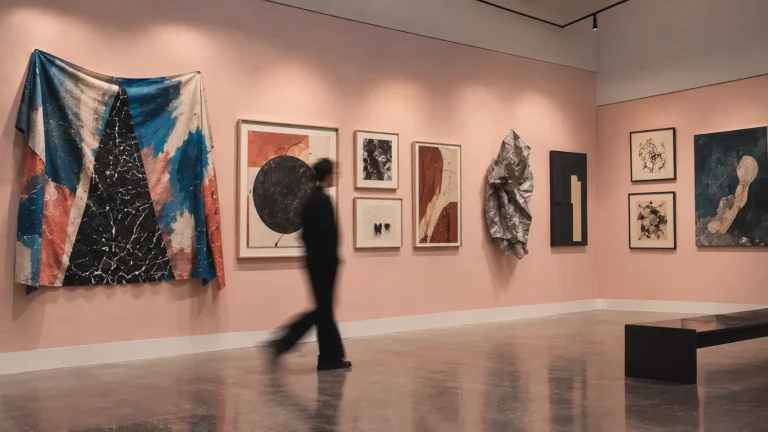
Collecting art has historically served as a means of preserving cultural memory, expressing intellectual inquiry, and supporting artistic production. It is interesting to know private collections are different widely in scale and focus, those of lasting significance are not just defined by the number of works they contain. They are distinguished by the consistency of their vision, the discrimination of their acquisitions, and their sustained engagement with artists and the ideas reflected in their work.
Contemporary art collecting lives within a dynamic ecosystem of artists, galleries, curators, critics, and collectors. Each of these acquisitions participate in this art network, contributing not only to the formation of a private collection but also to the broader cultural discourse. This is why collecting is beyond ownership; it is an act of support and a commitment to the development of artistic practice.
Unlike historical periods that benefit from the clarity of hindsight, contemporary art evolves in the present. Collectors engage with practices whose historical significance is still being shaped, requiring an understanding of artistic context rather than reliance on established consensus. The evaluation of an artwork therefore depends not only upon aesthetic judgment, but also upon an awareness of the artist’s conceptual concerns, technical development, and position within the contemporary field of inquiry.
Professional galleries occupy a central role in this process. Their responsibility extends beyond the presentation and sale of artworks to include the long-term development of artists’ careers, the production of exhibitions and scholarship, and the cultivation of informed relationships with collectors. Through curatorial programming, publications, and sustained representation, galleries provide the context through which individual works may be understood within an artist’s broader practice.
For you as a collector, the development of visual literacy remains fundamental. Exposure to museum exhibitions, biennials, gallery programmes, catalogues raisonnés, monographs, and critical writing gradually refines the ability to distinguish between immediate visual appeal and enduring artistic significance. Such knowledge cannot be acquired through isolated purchases; it develops through sustained observation and continued engagement with the field.
Within contemporary collecting, emphasis is increasingly placed on consistency rather than accumulation. Significant collections often emerge from sustained investigation into particular artistic questions, media, geographical contexts, or conceptual concerns. Individual acquisitions acquire greater meaning when considered as part of an evolving intellectual framework rather than as independent objects. Over time, the collection itself begins to articulate a distinct perspective, revealing the collector’s evolving understanding of contemporary art.
Considerations of provenance, exhibition history, institutional recognition, and professional documentation further situate an artwork within the historical record. While these elements contribute to an understanding of an artwork’s significance, they are most meaningful when considered alongside the quality and integrity of the artist’s practice. Market recognition may fluctuate over time, but rigorous artistic inquiry and sustained critical engagement remain more enduring measures of cultural importance.
The preservation of a collection extends beyond acquisition. Conservation, documentation, and responsible care preserve not only the physical condition of artworks but also the historical continuity of the collection itself. Collecting therefore assumes a custodial dimension, recognising artworks as cultural objects whose significance extends beyond individual ownership.
The formation of a collection should ultimately be understood as a gradual and evolving process rather than the pursuit of immediate completeness. Its value lies not simply in the works assembled, but in the knowledge, relationships, and sustained engagement that shape its development. The most respected collections reflect a continued dialogue with artists, institutions, and the cultural conditions from which contemporary art emerges.
At G.Z. Contemporary Art Gallery, we view collecting as a long-term intellectual and cultural pursuit. Our curatorial practice is grounded in scholarship, close collaboration with artists, and an informed understanding of the contemporary art landscape. Through research, dialogue, and careful selection, we assist collectors in building collections that possess lasting artistic, historical, and cultural relevance.
Whether you're furnishing an office, hospitality venue, or commercial property, we'll help create a curated art program tailored to your space and brand.
Whether you're acquiring your first artwork or expanding an existing collection, we'd be delighted to learn about your interests and recommend works that align with your vision
G.Z. Contemporary Art Gallery reviews submissions from artists whose work aligns with our curatorial vision. Due to the volume of applications, only selected artists will be contacted.
Subscribe for early access to new exhibitions, artist stories, available works, and private viewing opportunities.
